Saturday, May 31, 2014

Toys Built to Last

Museum friend John Southwick has a wonderful collection of (mostly) Model A Ford vehicles, and he recently spoke at the museum about Model As. In the garages and buildings he stores his vehicles can be seen numerous other cool objects he collects such as road signs, garage signs and license plates. He also has a very fun group of toy vehicles – most of them trucks. I had the pleasure of setting up an exhibit of some of my favorites at the museum.

Anyone who ever played with pressed steel toys knows the charm and indestructibility of such objects. One also learns the names of their favorites as they become imprinted on the brain at an early age… There are just a few brands represented in this group; Wyandotte or All Metal Toys, Buddy L and Tonka will be the most recognizable depending on your age and love of toy trucks.

Pressed steel became a popular material for toy trucks starting during the 1930s industrial boom. Steel scrap was often used and pressed incredibly thin by huge machines. The sheets could then be cut and pressed into molds to make all sorts of shapes and objects that were strong and could be painted in bright colors. These pressed steel toys were more durable than wood and seemed more like the trucks they were made to represent. The idea caught on like wildfire among toy enthusiasts and new companies formed to take advantage of the markets created.

Steel was to be used only for the war effort during WWII and production naturally dropped off. After the war, however, these toys were in high demand and became more detailed and realistic. With the introduction of plastic into the construction there was no end to the details and features included in the vehicles. Because of the basic steel construction, however, the durability remained. Many of the cars in John’s collection are still strong enough to withstand some serious play!

1930s Wyandotte dump truck, pressed steel


1930s Wyandotte dump truck, pressed steel


1930s Wyandotte Art Deco livestock trailer


love the spare tire!

Wyandotte – All Metal Products Co

These trucks are my personal favorite because of their design. The lines and windows and curves appeal to my love of 1930s-1940s cars. They seem to have more character than the later vehicles.

All Metal Products Company was an American toy company founded in 1920 and based in Wyandotte, Michigan for most of its history. It produced inexpensive pressed metal toys under the Wyandotte brand name, and was the largest manufacturer of toy guns in the US for several decades in the 20th century. The company’s slogan was “Wyandotte Toys are Good and Safe.” To keep costs down, the company used scrap and surplus raw materials whenever possible, often manufacturing their toys from scrap metal obtained from local auto factories.

1930s Buddy L fire truck, pressed steel


1960s Buddy L fire truck hook & ladder, pressed steel, plastic


1960s Buddy L pickup truck, pressed steel, plastic


Buddy L Toys

Buddy L toys were first manufactured by the Moline Pressed Steel Company, started by Fred A. Lundahl in 1910. The company originally made fenders and other stamped body parts for the automobile industry. The company primarily supplied parts for the McCormack-Deering line of farm implements and International Harvester Company trucks. Moline Pressed Steel did not begin manufacturing toys until 1921. Mr. Lundhal wanted to make something new, different, and durable for his son.

Fred Lundahl started by making a toy dump truck out of steel scraps for his son Buddy. Soon after, he began selling Buddy L “toys for boys” made of pressed steel. Buddy L made toy cars, dump trucks, delivery vans, fire engines, construction equipment and trains. Many were large enough for a child to straddle, propelling himself with his feet. A pioneer in the steel toy field, Lundahl persuaded Marshall Field’s and F.A.O. Schwarz to carry his line. He did very well until the Depression, then sold the company.

1930s Keystone Ride 'Em wrecker truck, Packard Model, pressed steel


Keystone Manufacturing Company

The founders of the company were Chester Rimmer and Arthur Jackson. Originally Keystone specialized in movie machines and producing comedy films for young children from 1920-1924. (Remember the Keystone Cops?) By 1924 they changed course and started to produce the Keystone brand of pressed steel toys.

Keystone started out big - they made larger-sized toys, and they produced lots of them. They were given permission by the Packard Motor Company to create reproductions of their well known full sized truck models. In addition, they made toy airplanes, trains and construction oriented toys.

Keystone also made toys for J.C. Penny – under the name “Ride-Em”, these toys entered the market in 1932. Each toy made of a Packard truck had the famous Packard logo placed at the front of the truck, along with the Keystone logo – usually on the side of the toy. In 1937 the Packard line of toys was phased out along with the Packard logo. After WWII they began producing wooden toys including train sets, by the 1960s they had sold out to various companies and Keystone ceased to exist.

1950s Structo car hauler, pressed steel

1950s Structo car hauler, pressed steel


Structo Manufacturing was founded in Freeport, Illinois in 1908. It was originally known as the Thompson Manufacturing Company — and later changed to “Structo Manufacturing” in 1911 — a play on the “inde-structo-ble quality of their steel building sets. Their motto was “Structo toys makes men of boys!” – and some of their earliest toys were steel construction kits - forerunners of the “Erector” set. Included in some of the builder sets were roadsters and trucks, launching many years of pressed steel vehicle toys produced all the way into the 1950s and 60s.

1960s Tonka dump truck, pressed steel - with tin cat pull toy


Tonka Toys

Mound Metalcraft was created in Mound, Minnesota in 1946 by three partners; Lynn Everett Baker, Avery F. Crounse, and Alvin F. Tesch. Their original idea was to manufacture garden implements. The building’s former occupant, the Streater Company, had made and patented several toys. E.C. Streater was not interested in the toy business so they approached Mound Metalcraft to buy the company. The three men at Mound Metalcraft thought the toys might make a good side line to their other products.

After some modifications to the design and the addition of a new logo with the Dakota Sioux word “Tanka” or Tonka, which means “Great” or “Big”, the company began selling metal toys. This soon became the primary business. In 1955 Mound Metalcraft changed its name to Tonka Toys, Incorporated. The logo at this time was an oval – showing the Tonka Toys name in red above waves – presumably honoring nearby Lake Minnetonka.

The impact of the Tonka truck concept has been enduring and pervasive, especially the Mighty Dump Truck and associated “Mighty” line of construction equipment models introduced from 1964. The all-metal “Tonka Trucks” were sold throughout the world and earned a reputation as being indestructible, although the steel has been increasingly replaced by plastic from the late 1980s onwards.

Saturday, May 3, 2014

First Impressions

before
after - including the settee and barometer
Every winter we keep our maintenance man Steve busy by renovating a room in the museum. In all of the rooms and halls, with the exception of the third floor ballroom, the wallpaper dates to some time in the 1950s or 60s - it is dingy and repaired in places. The tired old wallpaper does nothing to accent the collection or the wonderful building details and construction. So we remove the paper and choose an appropriate paint color - and then move objects around to fit the space and the theme of the room or hall better. Often the pictures on the walls seem haphazardly hung so this is our opportunity to bring an aesthetic eye to the walls and to create a more inviting and lovely room.

looking north - before
after... this little south hall holds the Battle of Plattsburgh exhibit
After finishing renovation of the third floor last winter, this winter we moved to the first floor hall and Steve renovated this very important space over the months of January, February and March. The results are stunning. The collection shines and the hall is so inviting now! I have taken the liberty of placing the wall objects so they relate better to the furniture and themes. I have also moved a few pieces that were easily overlooked in their previous homes, such as the handsome barometer.

below the stairs - before
after

Along with new paint and a fresh view, we have the newly conserved settee back from Williamstown Art Conservation Center. It is a George III carved mahogany settee from 1820 that has received a new show cover of crisp black hair cloth. You can read about the process and what the conservators discovered in my Wednesday, October 2, 2013 post, Touring the Settee. Stay tuned for a post about the completed settee. And come in for a tour! We are open Tuesday - Saturday with tours at 10am, Noon and 2pm.


look at the lovely settee!

Tuesday, March 25, 2014

A Carpet Bag's Story

I recently came across this accounting of one of the objects in the museum collection. This carpet bag belonged to William Miner's uncle John, and is now safely tucked away in storage. Its history teaches us of Uncle John and Aunt Huldah's lives as well... John and Huldah raised two orphans - Dora and their nephew William. I hope you enjoy the tale. To read more about Eva and Dora see my blog post from September 12, 2008, or click this link http://minermuseum.blogspot.com/2008/09/family-returns.html

"Written by Eva Simonds Vincent, daughter of Dora LaPorte Simonds, in her late eighties. She donated the carpet bag to the Alice T. Miner Museum.

After Eva's death in February of 1983, her sister Anna had Eva's story typed and gave it, too, to the Alice T. Miner Museum.

As we grow older our memory wanders back to days of long ago. I opened my closet door one day and found my old - but not quite forgotten - carpet bag hanging there. That old bag seemed to be trying to tell me a story, so I listened to what it had to say.

A Carpet Bag's Story

Many things have happened to me in my life - me, an old carpet bag! Did you know that Eva you are the third girl to care for me?

But my story begins with a very young man. Oh, he was tall, handsome, and very anxious for travel and adventure. He came into the store in this very small settlement in Northern New York State and bought me. My colors were bright, and fine leather handles had I then. I was very excited, for he packed me with what clothes he had and we headed for the west coast! a far place from my little settlement home.

It was 1849, and many times I heard men whispering the words "Gold in California!" The trip was not easy, but my new master, John Miner and I were young and eager for adventure.

While we were prospecting, a different kind of fever than the one that brought us out there broke out in camp. John, only 20 years old, came down with yellow fever. The Doctor did all he could for him, but John was very bad. Water was forbidden to the sick, but that was what he craved.

Now young Master John had a belt around his middle. In it he kept the gold nuggets that he had collected. Even while he was so sick, he bribed a small boy who ran errands for the men to bring him a watermelon. He hid that watermelon under his cot with me. He would suck on it piece by piece for the water that he craved.

When the Doctor visited again, Master John's condition was very much changed! The Doctor claimed that John had 'fever-eating watermelon', and that's the reason he lived to bring me back to the east and my home again.

When we returned, John decided to take part of the homestead and marry. He found a pretty young girl named Huldah. She was very young - yes, twenty years younger than John. Huldah was the first girl to love and care for me, and she layed (sic) me safely away with the belt in which my master had carried his California gold. The gold was gone now. Some of it John used to buy gold banded dishes for his bride.

When John and Huldah had been married for three years, Dora, a child whose mother had died, came to live with them. She became the second girl to love and care for me. When she was old enough to play dress-up, she carried me everywhere!

Dora, Uncle John, and Aunt Huldah, ca. 1867
Many happy years passed and before I knew it, it was time for Dora to be married. She was married in John and Huldah's home, but afterwards I lost sight of her for awhile. It was a very lonely time for me.

Before I knew it though, Dora's children came, and I was happy again! Her little girl came to visit Aunt Huldah and Uncle John and to play with me. What happy years those were!

Then came a time when Master John grew sick. He had no 'fever-eating watermelon' this time. It was very sad for me when my young Master John died.

Dora is the woman seated on the left... and could that be Aunt Huldah next to her?
Dora and her family came to live again in Master John's house with Huldah. We were to have a happy time again. My first and second little girls were together again. Dora's child, Eva, was the third little girl to love and cherish me.

Eva and Anna Simonds
As time goes by, those we love pass away. Huldah, my first little girl, went to be with my Master John. 

Dora packed me away for a long time in her closet. When she went to live with her daughter, my third little girl, I was happy once again. Eva took very loving care of me for I was nearly one hundred years old! Many happy years passed.

My Dora is long gone now, but I am still with old friends. Eva has no little girls to pass me on to, but she has arranged it to return me to the very spot where I was bought so many years ago by my young Master John! Where the old store stood, there is now a very fancy stone museum! It will be wonderful to be loved and at rest - and home!"


Saturday, March 8, 2014

Renovation Season

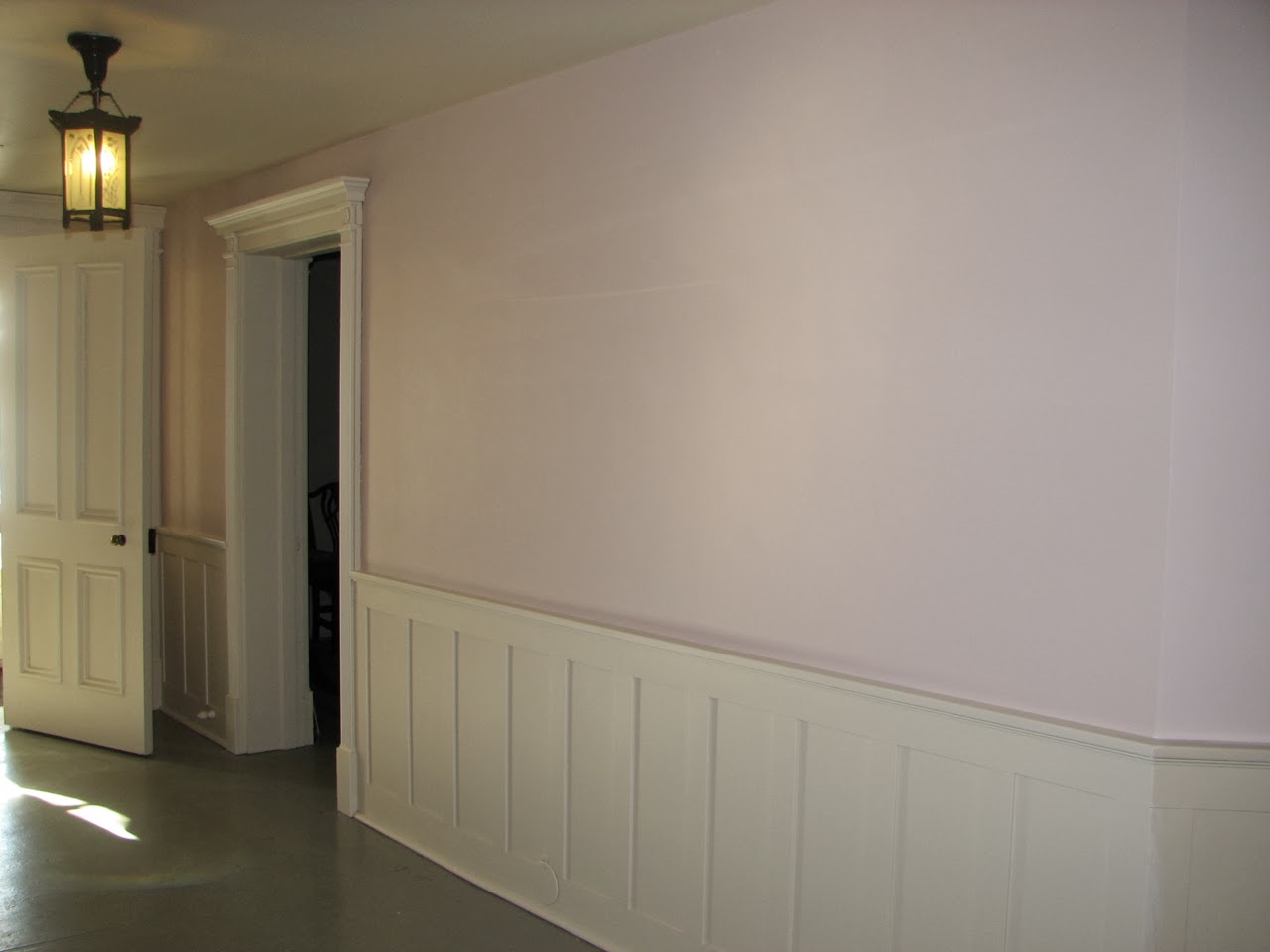
This winter we have moved our renovation projects to the first floor of The Alice to a space that will be noticeably changed to every visitor of the museum, whether they have come for tours or events. We are putting the finishing touches on the first floor hall soon! Here are some before photos along with current photos of the new wall color. With the help of our volunteers everything has been taken from the main hall and the south hall to clear the space to work. We then removed the old 1960s wallpaper and Steve has been working his magic with paint.

The work should be done by April when we are open by appointment. Hope you enjoy the photos... Once the collection items are back in their proper places this will be a most welcoming entree into The Alice.

the stairway down to the first floor - before

and after

the hall leading to the front (west) door with the old wallpaper

and transformed by paint!

with the front door at my back and looking toward the Colonial Kitchen - before


and after

looking toward the front door - after

the entry to the south hall - before

the south door - before

the south door - after

looking toward the stairs with the south door at my back - before

and after

alcove by the stairs - before

and after - the steam heat is still exposed

north wall of the main hall - before

and after

just left of the front door, you can see the damage on the rough wallpaper - before

and after
this shows the difference in the woodwork - old color to the left and new to the right